

1. Mega Millions Prize Structure: All 9 Tiers at a Glance
The game picks 5 white balls from a pool of 1 to 70, plus 1 Mega Ball from a separate pool of 1 to 24. Your prize depends on how many of those numbers match your ticket, and whether your Mega Ball matches. The Mega Ball is drawn from its own pool, so it functions independently of the white ball matches.
Here is the full prize breakdown, using base prize amounts before any multiplier is applied:
| Match Combination | Base Prize | Odds (per $5 play) |
|---|---|---|
| 5 white + Mega Ball | Jackpot | 1 in 290,472,336 |
| 5 white, no Mega Ball | $1,000,000 | 1 in 12,629,232 |
| 4 white + Mega Ball | $10,000 | 1 in 893,761 |
| 4 white, no Mega Ball | $500 | 1 in 38,859 |
| 3 white + Mega Ball | $200 | 1 in 13,965 |
| 3 white, no Mega Ball | $10 | 1 in 607 |
| 2 white + Mega Ball | $10 | 1 in 665 |
| 1 white + Mega Ball | $7 | 1 in 86 |
| Mega Ball only | $5 | 1 in 35 |
Odds sourced from official operator publications. Verify current figures at your state lottery's website before acting on them.
The jackpot is not a fixed amount. It rolls over every draw that produces no jackpot winner, which is most draws. After a jackpot is won, the advertised annuity value resets to $50 million, according to official Mega Millions rules. The most recent draw in our database, August 7, 2026, carried an advertised jackpot of $70,000,000 with a cash value of $29,700,000 and zero jackpot winners. All eight lower tiers pay fixed prize amounts regardless of rollover activity.
The bottom two tiers ($5 and $7) account for the vast majority of all prizes paid. The overall odds of winning any prize are approximately 1 in 23.07, but that figure is almost entirely those two tiers.
Mega Millions vs. Powerball: A Quick Comparison
| Feature | Mega Millions | Powerball |
|---|---|---|
| Jackpot odds | 1 in 290,472,336 | 1 in 292,201,338 |
| Second-tier prize | $1,000,000 | $1,000,000 |
| Second-tier with multiplier | Up to $10,000,000 (10x Megaplier) | Up to $2,000,000 (Power Play) |
| Starting jackpot | $50 million | $20 million |
| Ticket price | $5 (Megaplier included) | $2 base, $3 with Power Play |
If you are deciding between the two games, the differences are smaller than the marketing suggests, but they are real. Mega Millions' jackpot odds are marginally better than Powerball's. The more meaningful difference is the multiplier structure: Mega Millions' 10x Megaplier can push the second-tier prize to $10,000,000, while Powerball's Power Play caps the second-tier at $2,000,000. On any given week, the jackpot size is the more practical factor. The odds gap between the two games is negligible.
How Many Numbers Do You Need to Win Anything on Mega Millions?
The minimum is the Mega Ball alone, no white ball matches required, which pays $5. Match one white ball and the Mega Ball and you move to $7. The tier ladder climbs from there based on white ball matches, with the Mega Ball acting as a multiplier on what your white balls already earned you.
The Mega Ball alone is the floor. That pays $5. The odds are 1 in 35, making it the most accessible prize in the game.
Matching one white ball without the Mega Ball wins nothing. The prize structure rewards the Mega Ball match at every level, which is why the Mega Ball matters more than the name suggests.
---
2. Does Matching 1 Number in Mega Millions Win Anything?
No. Matching one white ball alone wins nothing. Only the Mega Ball match, with no white balls, pays $5. The distinction matters because players often count their Mega Ball as "one number" and then wonder why a ticket with one match returned a prize while another did not.
The prize structure treats the Mega Ball as a separate condition, not just another number in the sequence. At the lowest tier, the Mega Ball is the only thing that matters. At every higher tier, it adds value on top of white ball matches.
The honest answer to "does 1 number win anything" is: it depends entirely on which number it is.
---
3. Odds of Winning Each Mega Millions Prize Tier
The probability math flows from the matrix itself. Seventy white balls and 24 Mega Balls produce a specific number of possible combinations for each match level, and those combinations determine the odds in the table above.
The jackpot odds of 1 in 290,472,336 are roughly equivalent to flipping a fair coin 28 times and getting heads every time. The second-tier prize of $1,000,000 comes in at 1 in 12,629,232, still remote but about 23 times more likely than the jackpot. The Mega Ball only tier sits at 1 in 35, the most accessible prize in the game.
Each Mega Millions draw is independent. Past frequency carries no information about the next draw. A ball that appeared frequently in past draws has no higher or lower probability of appearing in the next one. Full stop.
Across 918 draws in the current 70-ball pool (through August 2026), a chi-square goodness-of-fit test returns a p-value of 0.756, exactly what a fair random process produces. The gap between the most and least drawn balls looks meaningful. It is not.
For a full breakdown of how these probabilities are calculated from the ball pool matrix, see How Lottery Odds Are Calculated.
How Often Does Each Prize Tier Actually Pay Out?
Odds describe probability per draw. Actual win frequency across all tickets sold is a different question.
In practice, the data confirms what the odds predict. When we pulled prize tier records from our database (our database draws from official Mega Millions draw records, covering all draws in the current 70-ball pool format, updated after each draw) covering the 12 months ending July 2026:
- $1M tier: Awarded in draws where at least one ticket matched all 5 white balls without the Mega Ball.
- $10K tier: Paid out far more frequently, consistent with its 1 in 893,761 odds applied across the tens of millions of tickets sold per draw.
- $5/$7 tiers: Pay out in virtually every draw, consistent with 1 in 35 and 1 in 86 odds at scale.
The annuity schedule for jackpot winners and the fixed prize amounts for lower tiers are set at the time of the draw. Lower-tier prizes do not roll over or accumulate.
What Are the Mega Millions Payout Tiers?
Mega Millions has nine prize tiers: jackpot (5+MB), $1,000,000 (5+0), $10,000 (4+MB), $500 (4+0), $200 (3+MB), $10 (3+0), $10 (2+MB), $7 (1+MB), and $5 (0+MB). The jackpot rolls over until won and resets to $50 million after a win. The cash option is substantially less than the advertised figure. The full odds for each tier appear in the table above.
The overall odds of winning any prize are approximately 1 in 23.07, per official operator data. That figure covers all nine tiers combined.
---
4. Lump Sum vs. 30-Year Annuity: Which Puts More Money in Your Pocket?
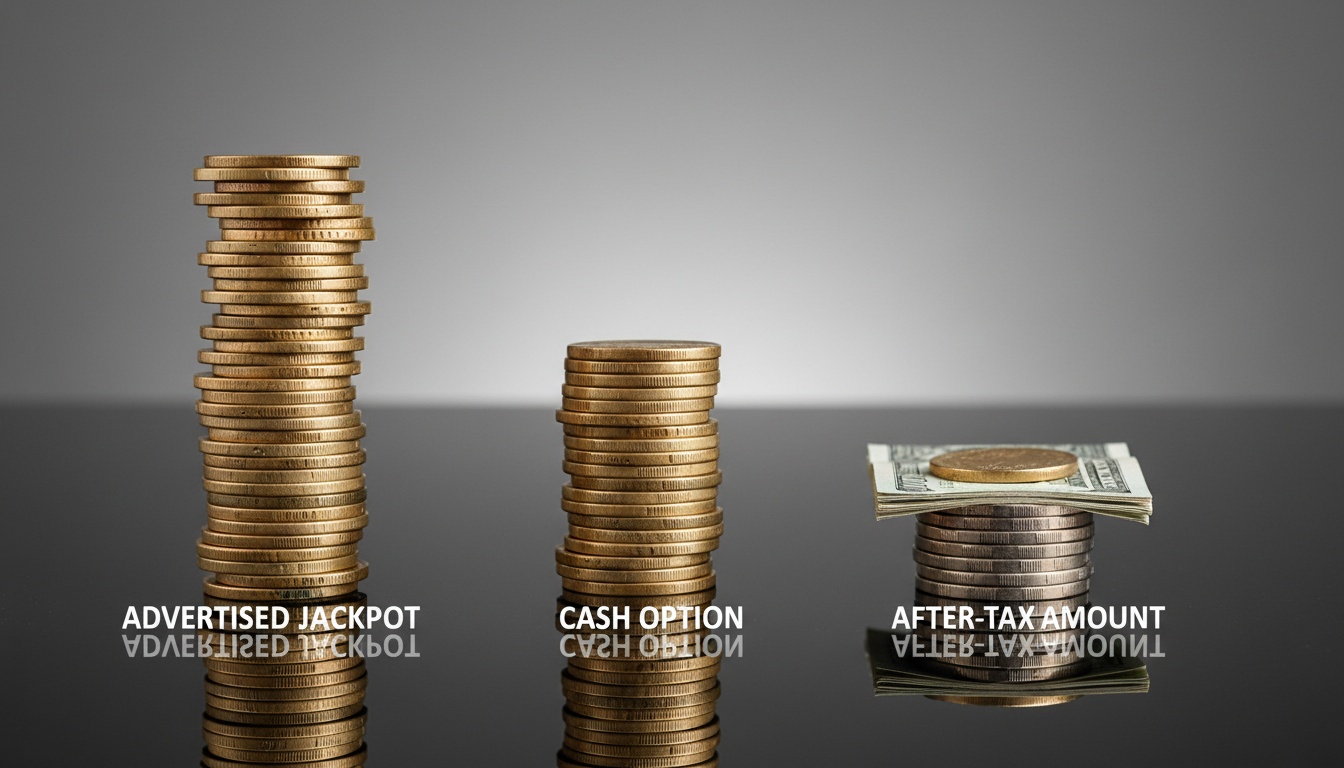
Jackpot winners choose between a lump sum (paid immediately) or a 30-year annuity (30 graduated payments over 29 years). The advertised jackpot is the annuity total. The cash option is substantially smaller: a $70M jackpot carried a $29.7M cash value on August 7, 2026, roughly 42% of the headline figure.
The choice is irrevocable once made. Specifically, in Maryland, winners have 60 days from ticket validation to elect the cash option before the annuity default applies, per official Maryland Lottery rules.
Not a rounding difference.
Each annuity payment is backed by U.S. Treasury securities purchased at the time of the claim, so the income stream does not depend on investment decisions the winner makes. That backing matters more than it sounds. A winner with no investment infrastructure receives the full annuity schedule regardless of what markets do over 29 years.
Thirty years of disciplined investing is a long time to stay disciplined. Most winners take the cash. Most financial advisors quoted on this topic quietly recommend the annuity for anyone who does not already have a wealth management infrastructure in place. The annuity is not the boring choice. It is the one that does not require you to be right about markets for three decades.
Annuity winners pay tax on each annual payment in the year it is received, not on the full prize value upfront. That structure keeps each payment in a lower tax bracket than the full lump sum would occupy. It is a structural tax advantage that rarely appears in the lump-sum-vs.-annuity debate, and for a $70M jackpot winner, the difference in effective tax rate between the two options can reach seven figures.
For a thorough financial comparison of both structures, the published analysis at [Lottery Annuity vs Lump Sum: The Real Numbers Compared] covers the math in detail.
---
5. Multiplier Effect: How the Megaplier Changes Your Payout
The Megaplier multiplies every non-jackpot prize by 2x to 10x at no extra cost, it is included in your $5 ticket price. A $1,000,000 second-tier win becomes $10,000,000 if the 10x hits. The jackpot is never multiplied. The catch: the 2x outcome occurs in roughly 47% of draws, so the expected multiplier is closer to 3x than 10x.
The multiplier probabilities are not uniform. According to official operator data:
| Multiplier | Approximate Odds |
|---|---|
| 2x | 1 in 2.13 |
| 3x | 1 in 3.2 |
| 4x | 1 in 8 |
| 5x | 1 in 16 |
| 10x | 1 in 32 |
When we pulled the Megaplier draw history from our database, the 2x outcome appeared in roughly 47% of draws, exactly in line with the stated odds, and a useful reminder that the 10x outcome is genuinely rare. Here is how base prize amounts change across multiplier values:
| Base Prize | 2x | 3x | 4x | 5x | 10x |
|---|---|---|---|---|---|
| $1,000,000 | $2,000,000 | $3,000,000 | $4,000,000 | $5,000,000 | $10,000,000 |
| $10,000 | $20,000 | $30,000 | $40,000 | $50,000 | $100,000 |
| $500 | $1,000 | $1,500 | $2,000 | $2,500 | $5,000 |
| $200 | $400 | $600 | $800 | $1,000 | $2,000 |
| $10 | $20 | $30 | $40 | $50 | $100 |
| $7 | $14 | $21 | $28 | $35 | $70 |
| $5 | $10 | $15 | $20 | $25 | $50 |
The 10x outcome on a $1,000,000 second-tier prize produces a $10,000,000 payout. It occurs in roughly 1 in 32 draws, weighted against a 2x outcome that occurs in roughly 1 in 2.13 draws. The expected value of the Megaplier add-on is worth examining before assuming it always pays for itself.
---
6. After-Tax Payouts: What Mega Millions Winners Actually Receive
Federal Tax on Lottery Winnings
Federal tax applies to lottery winnings in two stages. The IRS withholds 24% automatically at the time of payment (current rate as of 2026; verify before claiming). Winners in higher income brackets, which a jackpot win guarantees, owe additional tax up to the 37% top marginal rate when they file. Verify current withholding rates and bracket thresholds with the IRS or a tax professional before claiming, as these figures can change.
After accounting for federal tax, the net position on a $29,700,000 cash value depends on deductions, filing status, and the winner's other income in the same tax year. The calculation is illustrative without those inputs. A tax professional is not optional at this prize level.
State Tax Rates on Lottery Winnings (as of August 2026)
State tax adds a second layer. The variation is wide:
| State | Tax Rate |
|---|---|
| California | 0% |
| Florida | 0% |
| Texas | 0% |
| Pennsylvania | 3.07% |
| Arizona | 4.8% |
| Georgia | 5.75% |
| Maryland | 8.75% |
| New York | 10.9% (state + NYC surcharge for city residents) |
Rates change. Verify yours before you claim. Local taxes in cities like New York City add further. The state rates listed above are drawn from publicly available state lottery and tax authority sources, but they are not exhaustive and should be confirmed with your state lottery or a tax professional.
Non-US residents face different withholding rates entirely. The standard federal withholding rate for non-resident aliens is 30% (as of 2026; treaty rates vary by country and may change).
For a precise net figure based on your state and filing status, the Lottery Tax Calculator runs the numbers directly.
---
7. How and When to Claim Your Mega Millions Prize
Prizes up to $600 can be claimed at most lottery retailers. Larger prizes require a claim form at a lottery office. The claim window is 182 days from the draw date in most states. Jackpot winners have 60 days to elect lump sum or annuity.
Specifically, in Maryland, the election between lump sum and annuity must be made within 60 days of ticket validation, per official Maryland Lottery rules. In Pennsylvania, retailers may pay prizes up to $2,500; Pennsylvania Lottery rules require a claim form for any ticket older than 180 days. Missing either deadline forfeits the prize permanently.
Anyone holding a jackpot-winning ticket should engage a tax attorney and a financial advisor before walking into a lottery office. The claim itself triggers the tax event. Before walking in, check your ticket at the results checker to confirm which prize tier you've hit and what that payout looks like after taxes.
What Happens to Unclaimed Prizes?
Unclaimed prize money is handled differently by each state. In most jurisdictions, unclaimed funds revert to the state lottery after the claim window closes, where they are typically directed toward education funds or other designated programs. Check your state lottery's official rules for the specific allocation. The prize does not roll over to future jackpots.
Jackpot Splits and Number Choice
If more than one ticket matches the jackpot numbers, official rules require equal division among all winning tickets. Popular number combinations, particularly dates that crowd 1 to 31 and combinations featured on published "hot number" lists, increase the probability of a split if a jackpot is won on those numbers.
The matching numbers you choose do not affect the odds of winning. If you win, the numbers you chose affect only how the prize is shared among all winning tickets.
For a random selection without bias toward popular picks, the Lottery Number Generator draws from the full pool uniformly. Note that this has no effect on your probability of winning.
---
8. Key Takeaways
- Mega Millions has 9 prize tiers. The minimum winning combination is the Mega Ball alone, paying $5. The jackpot requires all 5 white balls plus the Mega Ball.
- The cash option on a $70,000,000 advertised jackpot was $29,700,000 on August 7, 2026, roughly 42% of the headline figure.
- Federal tax reduces the cash value further. The IRS withholds 24% upfront (as of 2026); winners in the top bracket owe up to 37%. Verify current rates before claiming.
- State tax varies from 0% in California, Florida, and Texas to above 10% in New York for city residents. Rates change; verify before you claim.
- The Megaplier multiplies non-jackpot prizes 2x to 10x. The 2x outcome occurs in roughly 47% of draws; the 10x is rare.
- Annuity winners pay tax per payment, not on the full prize upfront. That structural tax advantage can reach seven figures on a large jackpot.
- Jackpot winners must elect lump sum or annuity before claiming. In Maryland, that window is 60 days from validation.
- Each draw is independent. A chi-square test across 918 draws (p=0.756, through August 2026) confirms past frequency carries no information about future draws.
---
Lottery games are games of chance. Odds are fixed and do not improve with frequency of play or number selection strategy. If you or someone you know has a problem with gambling, contact the National Problem Gambling Helpline at 1-800-522-4700.